
Building a Weekly Meal Plan Around Sales and Pantry Staples
Learn a repeatable approach to planning family meals that reduces food waste, cuts grocery costs, and still puts varied dinners on the table.
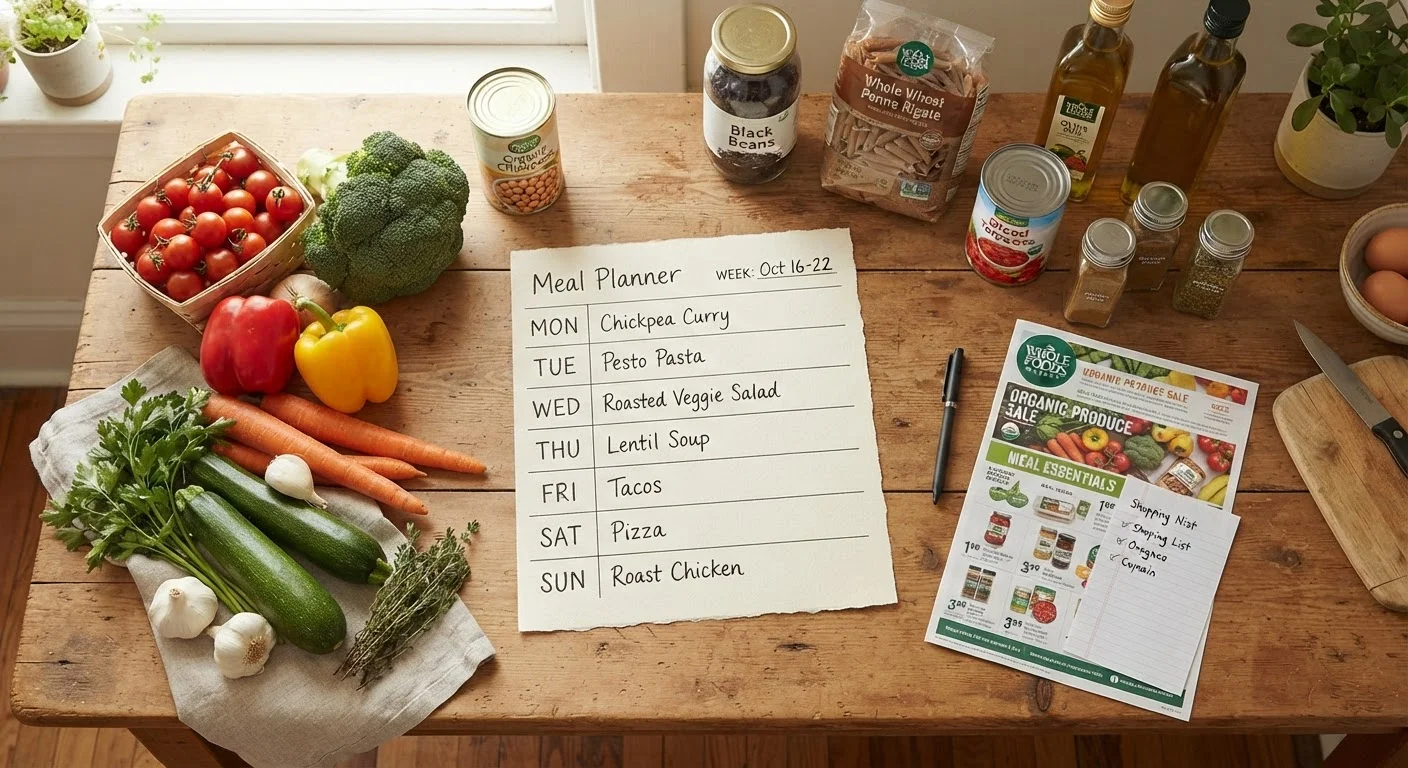
Photo: everythingtoday.com editorial
—— In This Article
Key Takeaways
- Check store sales and your pantry before writing a single meal idea.
- Building meals around protein on sale reduces weekly grocery spend without cutting variety.
- A flexible meal slot or two each week absorbs leftovers and prevents food waste.
- Pantry staples like canned beans, pasta, and rice are the backbone of budget meal planning.
- One planning session per week is enough to stay consistent without feeling overwhelmed.
Why starting with sales (not recipes) changes everything
Most families plan meals by flipping through cookbooks or browsing recipe apps, then head to the store hoping the ingredients are affordable. Flipping that order around, starting with what is on sale and what you already own, tends to produce a noticeably smaller receipt.
The logic is straightforward. Grocery stores rotate loss leaders and markdown items on a fairly predictable cycle. When chicken thighs or ground turkey are marked down, building two or three dinners around that protein costs far less than buying it at full price mid-week because a recipe called for it. The same holds for produce. A bag of bell peppers at a reduced price can anchor stir-fries, fajitas, and egg scrambles across several days.
This approach also pairs well with a solid pantry foundation. When your shelves already hold canned tomatoes, dried pasta, rice, lentils, and a range of spices, a sale protein or a marked-down vegetable becomes a full meal rather than half an ingredient list. For a deeper look at how those pantry staples can stretch across an entire week, see how dried beans can anchor multiple meals.
If you want a broader framework for keeping nutrition in the picture while holding the budget line, meal planning for balanced family nutrition on a tight budget covers the full picture.
What you need before you start
The planning process goes faster when a few things are already in place. Before writing your first meal idea each week, gather the following.
What you will need
Once you have those in hand, the actual planning takes 20 to 45 minutes, even for larger families. A family shopping prep checklist can help you turn this routine into something automatic.
How to build the week's meals, step by step
Follow these steps once per week, ideally one or two days before your regular shopping trip. The order matters because each step feeds the next.
Scan the sales flyer for proteins and produce first
Open the store flyer and look only at meat, seafood, and fresh or frozen produce to start. Note two or three proteins at a reduced price and any vegetables that appear marked down. These become the anchors for your week.
Cross-reference what you already own
Before writing any meals, check your pantry and freezer. If you have a half-box of pasta, canned tomatoes, and dried oregano, a sale on ground beef means spaghetti is nearly free to make. The goal is to use sale items to complete meals built on what you already have, not to buy everything from scratch.
Assign proteins to nights, not recipes
Write the protein next to a night of the week before you pick a specific dish. Chicken thighs on Monday and Thursday, beans on Wednesday, and ground turkey on Saturday, for example. Once the proteins are placed, choosing a recipe for each becomes much easier because the most expensive variable is already decided.
Fill in the rest of each meal from your pantry
With the protein placed, build the rest of each meal from what you already own. Rice, pasta, canned beans, frozen vegetables, and basic spices can support dozens of combinations. Only add ingredients to your shopping list that you genuinely need and cannot substitute.
Add one or two flexible nights to the plan
Reserve at least one night as a "use it up" meal. Do not assign a recipe to it. At the end of the week, this slot absorbs any perishables that need to be used before they spoil: leftover roasted vegetables, a partial bag of salad greens, or protein from a previous night that stretched further than expected.
Write your shopping list from the gaps only
Go through each planned meal and list only the ingredients you do not already have. Keep the list organized by store section (produce, dairy, dry goods) to move through the store efficiently and reduce the chance of grabbing extras. A practical couponing system can stack additional savings on top of the sale prices you have already built the plan around.
Keeping the plan realistic week after week
A plan only saves money if the family actually follows it. A few habits help.
Build in one or two flexible nights each week labeled something like "use it up" or "pantry dinner." These slots absorb leftovers, prevent spoilage, and give everyone a break from structured cooking. Food that might otherwise go to waste becomes a meal instead. If you want to close the loop on scraps and vegetable trimmings that do not make it into meals, composting at home is a natural next step.
Watch for shopping habits that quietly undercut even the best plan. Impulse purchases and swapping planned proteins for pricier options mid-trip add up fast. grocery shopping habits that quietly drain nutritional value covers the patterns worth rethinking.
Finally, keep a running pantry inventory somewhere visible, a whiteboard on the fridge works well. Crossing off items as you use them and noting when a staple runs low means you will not arrive home from the store missing the one ingredient that holds three meals together. For a complete system around budgeting the grocery trip itself, building a family grocery budget that holds up is worth reading alongside this guide.

Lifestyle Editorial Team
Lifestyle Editorial Team is the collective byline for our editorial team and contributor network. Articles published under this byline or an editorial pen name are researched, written, and reviewed according to our editorial standards for clarity, consistency, and independence before publication.
View author profile