
Stretching a Pound of Dried Beans Into a Week of Family Meals
Dried beans are one of the most affordable protein sources available. Learn how to cook, season, and use them across multiple meals.
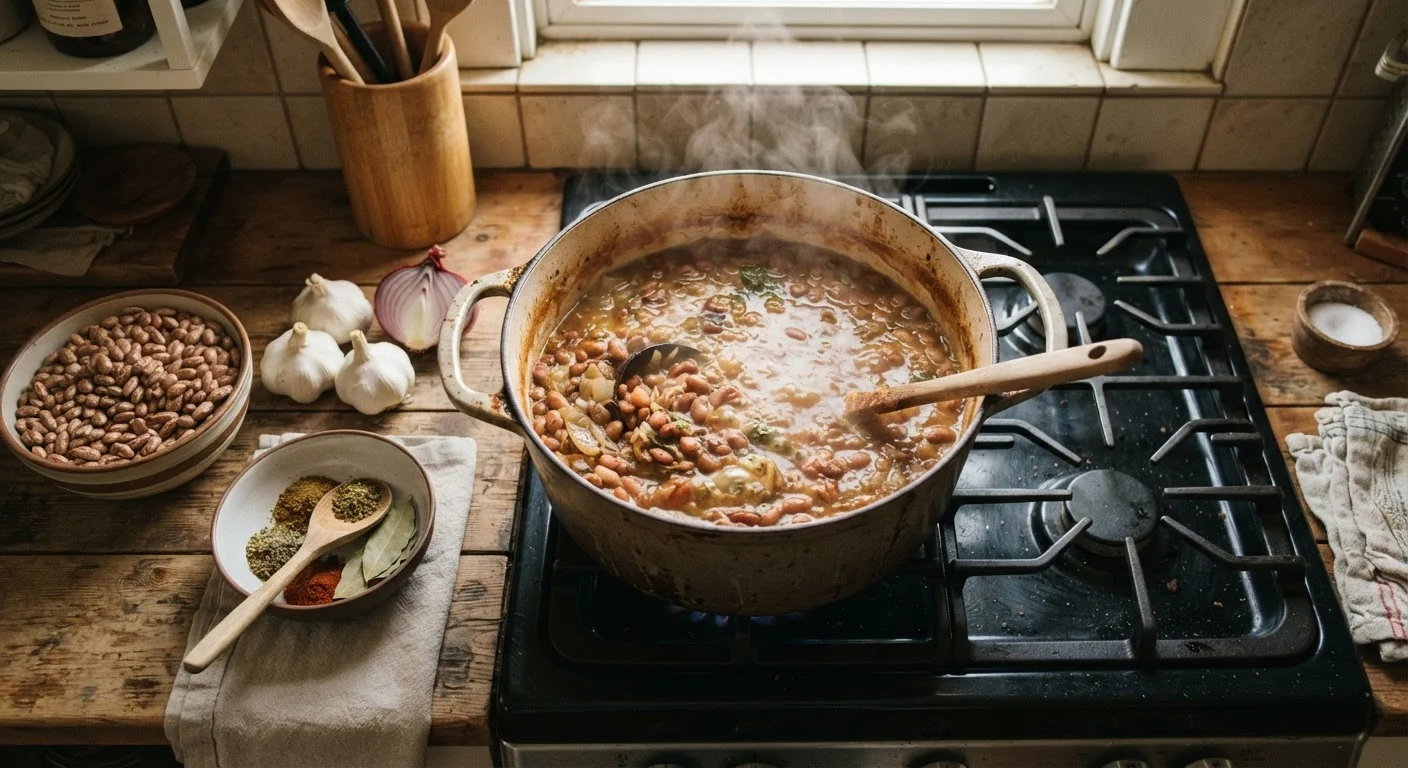
Photo: everythingtoday.com editorial
—— In This Article
Key Takeaways
- One pound of dried beans yields roughly six cups cooked, enough protein for four to six people across several meals.
- Soaking beans overnight cuts cooking time and may reduce compounds that cause digestive discomfort.
- Cooked beans keep in the refrigerator for five days or freeze well for up to three months.
- Pairing beans with whole grains creates a more complete amino acid profile at very low cost.
- Simple seasoning variations let you use the same batch of beans in different cuisines across the week.
Why dried beans belong in every family's pantry
A one-pound bag of dried beans is one of the lowest-cost sources of protein and fiber available at most grocery stores. When cooked, that single pound yields roughly six cups, enough to anchor four to six separate servings depending on portion size and what else is on the plate. For families working with a tight grocery budget, that math is hard to beat.
Beyond cost, beans supply iron, folate, potassium, and slow-digesting carbohydrates that help keep energy steady. The USDA's dietary guidelines count beans and legumes in both the protein and vegetable food groups, which reflects how nutritionally broad they are. Black beans, pinto beans, navy beans, and chickpeas are all good starting points because they are widely available and work across many cooking styles.
For families thinking about protein sources for children, the comparison of plant and animal protein is worth reading alongside this guide. Beans alone do not supply every essential amino acid in the same proportions as animal protein, but eaten alongside grains across the day, the gap closes considerably. See the whole grains budget guide for pairing ideas that keep total costs low.
This article is for informational purposes only and is not a substitute for advice from a registered dietitian or healthcare provider.
What you need before you start
Gathering supplies takes only a few minutes. The steps below cover soaking, cooking, seasoning, and portioning a full pound of dried beans for use throughout the week.
What you will need
Large pot (4-quart minimum)
Used to soak and then simmer the beans on the stovetop until fully cooked.
Slow cooker
An alternative to stovetop cooking that allows beans to cook unattended over several hours.
Pressure cooker or Instant Pot-style appliance
Cuts stovetop cooking time significantly, especially useful for chickpeas and larger beans.
Airtight storage containers
Used to portion cooked beans into meal-sized amounts for refrigerator or freezer storage.
Colander or fine-mesh strainer
Used to rinse dried beans before soaking and to drain soaking water before cooking.
How to cook and portion a pound of dried beans
Follow these steps once per week, ideally on a day when you have time to let the beans soak. The total hands-on time is short; most of the clock is passive soaking and simmering.
Sort and rinse the dried beans
Spread the dried beans on a clean flat surface or baking sheet and remove any shriveled beans, small stones, or debris. Transfer to a colander and rinse thoroughly under cold running water.
Soak the beans overnight
Place the rinsed beans in a large bowl and cover with cold water by at least three inches. Soak for eight to twelve hours at room temperature, or refrigerate if your kitchen runs warm. Drain and discard the soaking water before cooking.
Cook the beans until tender
Transfer the drained beans to a large pot and cover with fresh cold water by two to three inches. Bring to a boil over medium-high heat, then reduce to a gentle simmer. Cook uncovered or partially covered, stirring occasionally, until beans are completely tender throughout, with no chalky center when squeezed. Cooking time varies by bean type: black beans typically take 45 to 60 minutes; chickpeas can take 90 minutes or longer on the stovetop.
Season a base batch
Once tender, add salt to taste and any base seasonings you plan to use across the week. A simple starting point: one teaspoon of salt per cup of cooked beans, plus garlic and cumin if desired. Stir well and let the beans sit in their cooking liquid for ten minutes to absorb seasoning.
Portion and store for the week
Divide the cooked beans into meal-sized portions of roughly one to one-and-a-half cups each. Store portions you plan to use within five days in sealed containers in the refrigerator. Freeze remaining portions in zip-seal bags laid flat so they thaw quickly. Label each container with the date and bean variety.
Cooked beans stored in the refrigerator are safe to use for up to five days according to USDA food safety guidelines. Frozen beans maintain quality for up to three months.
Using your cooked beans across the week
Once the beans are cooked and portioned, the goal is to keep meals feeling distinct so no one at the table feels like they are eating the same thing repeatedly. One batch can move through several different flavor profiles with very little extra effort.
- Day 1: Serve as a simple side seasoned with cumin, garlic, and lime alongside rice. Pairing with brown rice makes the meal more filling and rounds out the amino acid profile.
- Day 2: Mash a cup of beans with a fork and spread on toast or use as a base for a quick burrito with whatever vegetables are on hand.
- Day 3: Stir beans into a broth-based soup with diced tomatoes, onion, and any wilting vegetables in the refrigerator drawer.
- Day 4: Toss beans into a grain bowl with cooked barley or farro, shredded cabbage, and a simple vinegar dressing.
- Day 5: Blend remaining beans with garlic and olive oil for a simple dip served with raw vegetables or crackers.
Rotating seasonings is the simplest way to vary the experience. Smoked paprika and oregano read as Spanish-influenced; ginger, soy, and sesame shift the same beans toward an East Asian profile; canned tomatoes with chili powder move them toward a Tex-Mex direction. This approach fits naturally into a meal plan built around pantry staples, where a single cooked ingredient appears in varied forms without waste.
If your family is new to eating beans regularly, introduce them gradually and increase portions over one to two weeks to give digestion time to adjust. Rinsing soaked beans before cooking and discarding the soaking water can help. Individuals with specific digestive conditions should consult a healthcare provider before making major dietary changes.

Nutrition Editorial Team
Nutrition Editorial Team is the collective byline for our editorial team and contributor network. Articles published under this byline or an editorial pen name are researched, written, and reviewed according to our editorial standards for clarity, consistency, and independence before publication.
View author profile