
Composting at Home: Savings, Soil Benefits, and Realistic Expectations
Composting reduces waste and feeds your garden for free, but it takes time and attention. A balanced look at what it offers and what it demands.
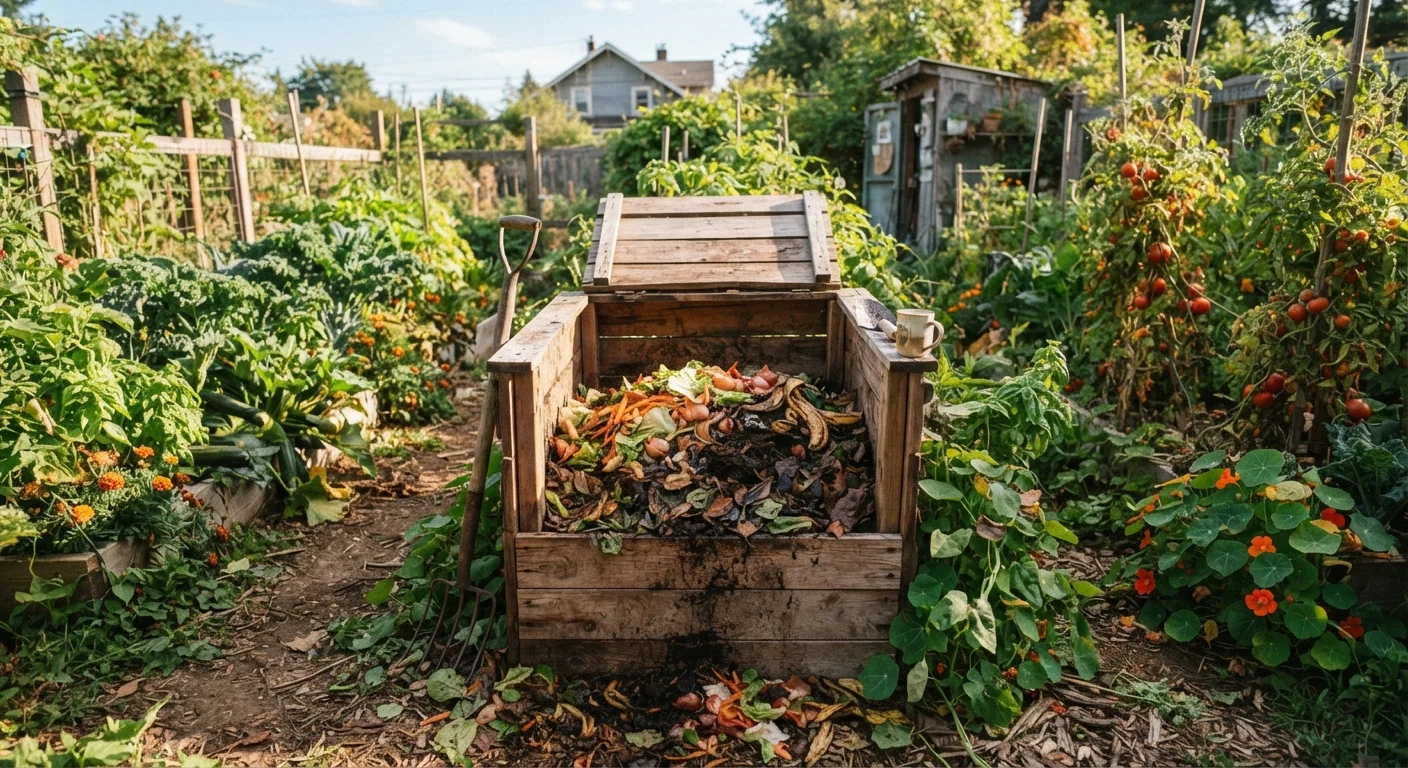
Photo: everythingtoday.com editorial
—— In This Article
Key Takeaways
- Composting cuts the amount of organic waste sent to landfill and can reduce household garbage volume noticeably.
- Finished compost improves soil structure and feeds plants, which can lower spending on bagged amendments and fertilizers.
- A working compost pile needs regular attention: turning, moisture management, and a balanced mix of materials.
- Compost takes weeks to months to mature, so it is not an instant solution for garden soil needs.
- Apartment dwellers and households with limited outdoor space face real practical barriers to traditional composting.
Reduces spending on bagged soil amendments
Finished compost can replace purchased soil conditioner, bagged compost, and some slow-release fertilizers, cutting a recurring garden expense over multiple seasons.
Improves soil structure durably
Compost adds organic matter that persists in soil, improving drainage in clay and water retention in sand, with benefits that build over time rather than washing out quickly.
Diverts household waste from landfill
Kitchen scraps and yard clippings make up a large share of residential waste. Composting those materials at home reduces what goes to the curb each week.
Startup cost is very low
A functional compost pile can be started with little more than a corner of the yard and a few basic tools, or a simple bin built from salvaged materials.
Feeds soil biology, not just plants
Compost supports beneficial microorganisms and earthworms that help break down nutrients into forms plant roots can absorb, which synthetic fertilizers do not replicate.
Takes months to produce usable material
Under typical home conditions, a compost pile takes three to six months or longer to fully mature. Gardeners who need amended soil quickly cannot rely on a new pile.
Requires consistent time and attention
Turning the pile, monitoring moisture, and balancing inputs adds a regular chore to the household routine that some families find hard to maintain through busy seasons.
Can attract pests if mismanaged
Adding meat, dairy, or oily food scraps, or leaving a pile unturned and wet, can attract rodents and other animals, which creates problems in suburban and urban yards.
Not practical without outdoor space
Traditional composting requires a yard or a dedicated outdoor area. Renters and apartment dwellers have limited options, and indoor alternatives have much smaller capacity.
Learning curve for beginners
Getting the carbon-to-nitrogen ratio right, recognizing a stalled pile, and knowing what to add or remove takes some experience that first-time composters build through trial and error.
What composting actually does
Composting is the controlled breakdown of organic material, kitchen scraps, yard clippings, cardboard, into a dark, crumbly amendment called finished compost. Microbes, worms, and fungi do the bulk of the work; your job is to give them the right conditions.
The end product is sometimes called "black gold" in gardening circles because it improves soil in ways that bagged products can only partially replicate. Finished compost loosens dense clay soils, helps sandy soils hold water, and slowly releases nutrients as plants need them. For families already growing vegetables or maintaining a lawn, that matters. If you use compost in a raised bed or container garden, the savings on purchased soil mix can be substantial over a few seasons. See our container gardening guide for more on how soil quality affects yields when space is limited.
On the waste side, the US Environmental Protection Agency has estimated that food and yard waste together make up a large share of what American households send to landfill. Diverting that material at home reduces trash pickup frequency for some households, which can lower costs if your municipality charges by volume or bag count.
The real advantages
Reduces spending on bagged soil amendments
Finished compost can replace purchased soil conditioner, bagged compost, and some slow-release fertilizers, cutting a recurring garden expense over multiple seasons.
Improves soil structure durably
Compost adds organic matter that persists in soil, improving drainage in clay and water retention in sand, with benefits that build over time rather than washing out quickly.
Diverts household waste from landfill
Kitchen scraps and yard clippings make up a large share of residential waste. Composting those materials at home reduces what goes to the curb each week.
Startup cost is very low
A functional compost pile can be started with little more than a corner of the yard and a few basic tools, or a simple bin built from salvaged materials.
Feeds soil biology, not just plants
Compost supports beneficial microorganisms and earthworms that help break down nutrients into forms plant roots can absorb, which synthetic fertilizers do not replicate.
The financial case for composting is strongest for households that already spend money on bagged compost, soil conditioner, or slow-release fertilizer each spring. A well-maintained pile can produce enough material in a season to amend several garden beds, and it costs nothing beyond the initial setup of a simple bin.
The soil improvement is also durable. Unlike synthetic fertilizers, which wash out quickly, compost builds organic matter that stays in the soil and supports plant health over multiple growing seasons. Families growing food at home, whether in raised beds or in-ground plots, tend to see the clearest return. For a full comparison of how soil inputs affect long-term costs, the raised beds vs. in-ground planting breakdown covers that ground in detail.
The real disadvantages
Takes months to produce usable material
Under typical home conditions, a compost pile takes three to six months or longer to fully mature. Gardeners who need amended soil quickly cannot rely on a new pile.
Requires consistent time and attention
Turning the pile, monitoring moisture, and balancing inputs adds a regular chore to the household routine that some families find hard to maintain through busy seasons.
Can attract pests if mismanaged
Adding meat, dairy, or oily food scraps, or leaving a pile unturned and wet, can attract rodents and other animals, which creates problems in suburban and urban yards.
Not practical without outdoor space
Traditional composting requires a yard or a dedicated outdoor area. Renters and apartment dwellers have limited options, and indoor alternatives have much smaller capacity.
Learning curve for beginners
Getting the carbon-to-nitrogen ratio right, recognizing a stalled pile, and knowing what to add or remove takes some experience that first-time composters build through trial and error.
The most common reason people abandon compost piles is that the process moves slower than expected. A pile that is too dry, too wet, or lacking nitrogen-rich material (fruit scraps, grass clippings, coffee grounds) stalls and produces little. Getting the balance right takes some trial and error.
Odor and pests are the other friction points. A pile that is managed correctly, with a good carbon-to-nitrogen ratio and regular turning, should not smell strongly. One that is neglected or loaded with meat and dairy scraps can attract animals and create a persistent odor problem, which matters more in densely populated neighborhoods.
Setup costs and time commitment
What you can and cannot compost
Fruit and vegetable scraps, coffee grounds, eggshells, grass clippings, dry leaves, and plain cardboard are all good compost inputs. Meat, fish, dairy, oily food, and pet waste should stay out of a home pile because they decompose slowly, generate stronger odors, and attract animals. Some municipal programs accept a wider range of materials, so check what your local program allows if you have access to one.
A basic compost bin can be built from scrap lumber or salvaged pallets for next to nothing. Tumbler-style bins cost more upfront but speed up the process and deter pests. Neither option requires a significant financial investment to get started.
Time is the more honest cost. Turning a pile every one to two weeks, monitoring moisture, and balancing material inputs takes roughly 15 to 30 minutes a week during the active gardening season. Some households find that rhythm easy to build into yard chores; others find it falls off when schedules get busy. If a pile sits unturned for months, it will still break down eventually, just much more slowly.
Cutting down on food waste is a related habit worth building alongside composting. Families who plan meals carefully tend to generate less spoilage in the first place. The meal planning on a tight budget guide covers strategies for reducing what ends up in the trash or the compost bin to begin with.
Who it works for, and who it does not
Composting fits naturally into households that already do yard work, generate kitchen scraps regularly, and have a patch of outdoor space where a bin can sit without causing a problem for neighbors. Families with an active vegetable garden get the clearest return because they have a direct use for the finished material.
Renters, apartment dwellers, and households without outdoor space face a genuine barrier. Vermicomposting (worm bins) works indoors on a small scale, but it requires its own management routine and has a lower volume capacity. Municipal composting programs, where available, are a more practical alternative for those households.
For lawn-focused yards, finished compost can be top-dressed onto grass in fall to improve soil over time. If that approach interests you, it is worth reading about common lawn care myths first, since several popular soil amendment habits do more harm than good.
~30%
Share of household waste that is compostable
The US EPA has estimated that food scraps and yard trimmings together account for roughly 30% of what American households throw away, much of which could be composted instead.
3-6 months
Typical time to finished compost
Under average home conditions with regular turning and a balanced mix of materials, most backyard piles produce finished compost within three to six months.

Home & Garden Editorial Team
Home & Garden Editorial Team is the collective byline for our editorial team and contributor network. Articles published under this byline or an editorial pen name are researched, written, and reviewed according to our editorial standards for clarity, consistency, and independence before publication.
View author profile