
Whole Grains on a Budget: Brown Rice, Oats, Barley, and Beyond
A practical look at the most nutritious and affordable whole grains, what each offers, and easy ways to work them into everyday family cooking.
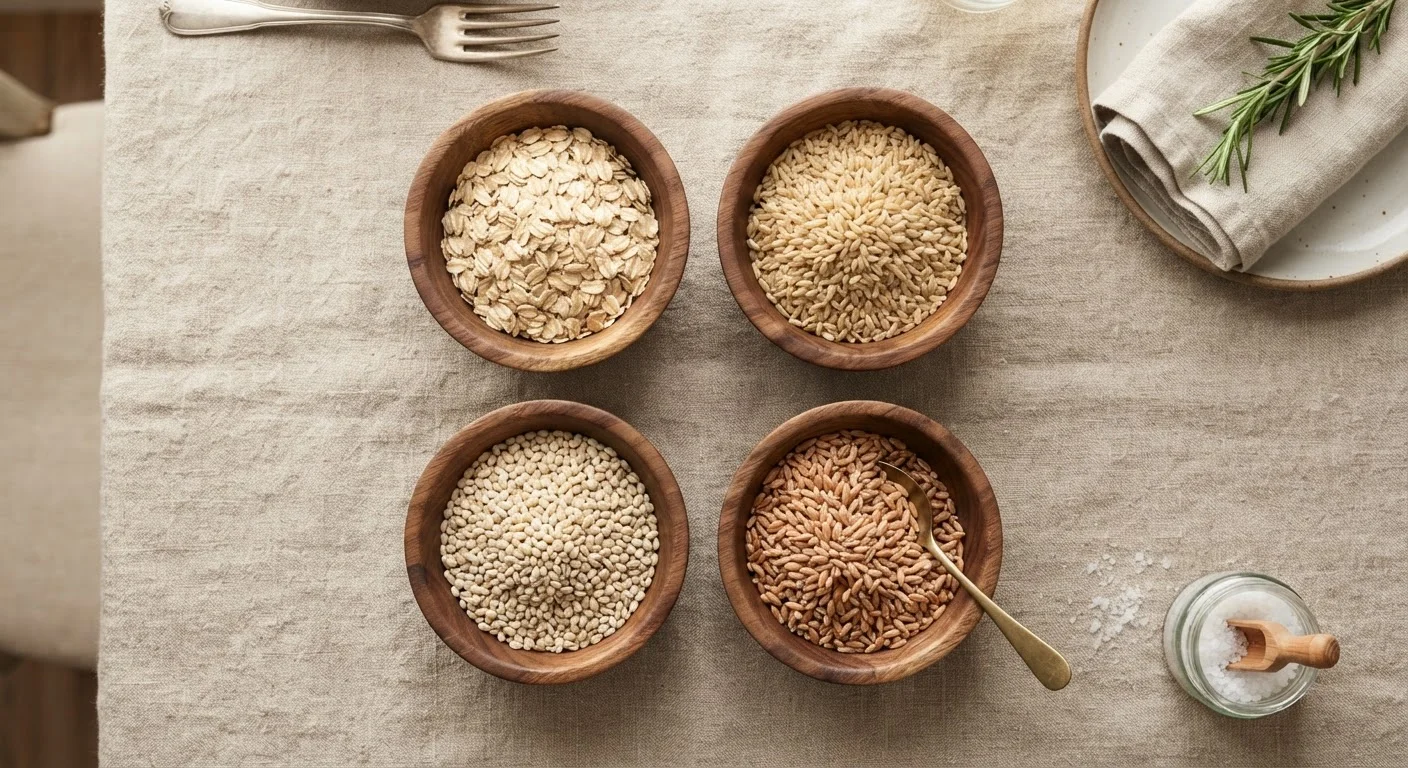
Photo: everythingtoday.com editorial
—— In This Article
Why whole grains belong in a family food budget
Whole grains are the intact seed of a cereal plant: the bran, germ, and endosperm are all present. Refined grains, by contrast, have had the bran and germ stripped out, removing most of the fiber, B vitamins, iron, and healthy fats along with them. The USDA Dietary Guidelines for Americans recommend that at least half of all grains consumed be whole grains, yet most American families fall well short of that target.
The budget case is equally strong. Dry whole grains are among the lowest cost-per-serving foods in any grocery store. A two-pound bag of rolled oats, for example, provides dozens of servings at a fraction of the price of boxed breakfast cereals. Buying in bulk from store bins or larger bags lowers the cost further. Pairing whole grains with dried beans and legumes stretches a food budget while covering both complex carbohydrates and plant protein in one meal.
Whole grain
A grain that contains all three original parts of the seed: the bran, germ, and endosperm. Whole grains retain more fiber, vitamins, and minerals than refined grains.
Beta-glucan
A type of soluble fiber found in oats and barley. Regular consumption is associated with supporting healthy cholesterol levels, according to FDA-reviewed research.
Bran
The outer layer of a grain kernel. It contains most of the fiber and a significant portion of the B vitamins and minerals found in whole grains.
Germ
The nutrient-rich embryo of a grain seed. It contains healthy fats, B vitamins, and vitamin E, and is removed during the refining process.
Endosperm
The starchy inner portion of a grain kernel that provides most of the carbohydrate energy. It is the only part retained when grains are refined into white flour or white rice.
Hulled barley
Barley with only the inedible outer hull removed, leaving the bran and germ intact. It is the most nutritious form of barley but takes longer to cook than pearl barley.
A practical look at common affordable whole grains
Each grain has a different flavor, cook time, and nutritional profile. Understanding those differences helps families rotate grains without meals becoming repetitive.
Brown rice
Brown rice is white rice with the bran and germ intact. It has more fiber, magnesium, and B vitamins than white rice. It takes roughly 45 minutes to cook on the stovetop, though a rice cooker or pressure cooker shortens that. Cooked brown rice stores in the refrigerator for up to five days, so cooking a large batch on Sunday pays off all week in grain bowls, stir-fries, and soups.
Rolled oats
Rolled oats (old-fashioned oats) are whole oat groats that have been steamed and flattened. They are high in beta-glucan, a soluble fiber the body uses to support healthy cholesterol levels, according to research compiled by the FDA. Beyond breakfast porridge, oats work in savory dishes, baked goods, and as a binder in meatballs or veggie burgers.
Barley
Hulled barley retains all three grain layers and has one of the highest fiber contents of any whole grain, with a reported 6 grams per cooked cup. It absorbs broth well, which makes it a natural addition to soups and stews. Pearl barley is slightly more processed but still contains meaningful fiber and cooks faster, around 30 minutes versus 45 to 60 for hulled barley.
Farro, bulgur, and millet
Farro is an ancient wheat variety with a nutty flavor and about 7 grams of protein per cooked cup. Bulgur is pre-cooked cracked wheat that hydrates in under 15 minutes with hot water, which makes it one of the fastest whole grains to prepare. Millet is gluten-free, mild in flavor, and inexpensive; it cooks like rice and works in porridges, pilafs, and flatbreads. Families avoiding gluten should confirm the product is certified gluten-free, since cross-contamination during processing can occur.
| USDA whole grain recommendation | At least half of daily grains should be whole grains (USDA Dietary Guidelines for Americans) |
| Brown rice cook time | About 45 minutes (stovetop) |
| Barley fiber per cooked cup | Approximately 6 grams (hulled barley) (USDA FoodData Central) |
| Farro protein per cooked cup | About 7 grams (USDA FoodData Central) |
| Bulgur prep time | Under 15 minutes with hot water |
| Cooked grain refrigerator storage | Up to 5 days (USDA food safety guidelines) |
| Cooked grain freezer storage | Up to 3 months (USDA food safety guidelines) |
Getting whole grains into everyday cooking
Whole grains integrate into meals most families already cook. Replacing white rice with brown rice or farro in a grain bowl costs pennies more per serving. Adding a half cup of barley to a pot of vegetable soup adds fiber and volume without changing the flavor profile noticeably. Overnight oats, made the night before in a jar, require no morning cooking at all.
Batch cooking is the most practical strategy. Cooking two to three cups of dry grain at the start of the week produces enough cooked grain to appear across multiple dinners and lunches. Cooked grains freeze well for up to three months in zip-top bags, which prevents waste when a busy week disrupts meal plans.
For families working out how whole grains fit into a broader weekly plan, the meal planning guide for balanced family nutrition covers how to build a realistic rotation around affordable staples. If shopping habits are making it harder to reach those goals, the article on grocery habits that drain nutritional value identifies common patterns worth reconsidering at the store.
This article is for general informational purposes only and is not a substitute for personalized medical or dietary advice. Consult a registered dietitian or qualified healthcare professional for guidance specific to your family's health needs.

Nutrition Editorial Team
Nutrition Editorial Team is the collective byline for our editorial team and contributor network. Articles published under this byline or an editorial pen name are researched, written, and reviewed according to our editorial standards for clarity, consistency, and independence before publication.
View author profile