Second-Hand Shopping for Families: Thrift Stores, Online Marketplaces, and Buy-Nothing Groups
A grounded look at where families find quality used goods, what to inspect before buying, and how each resale channel differs in practice.
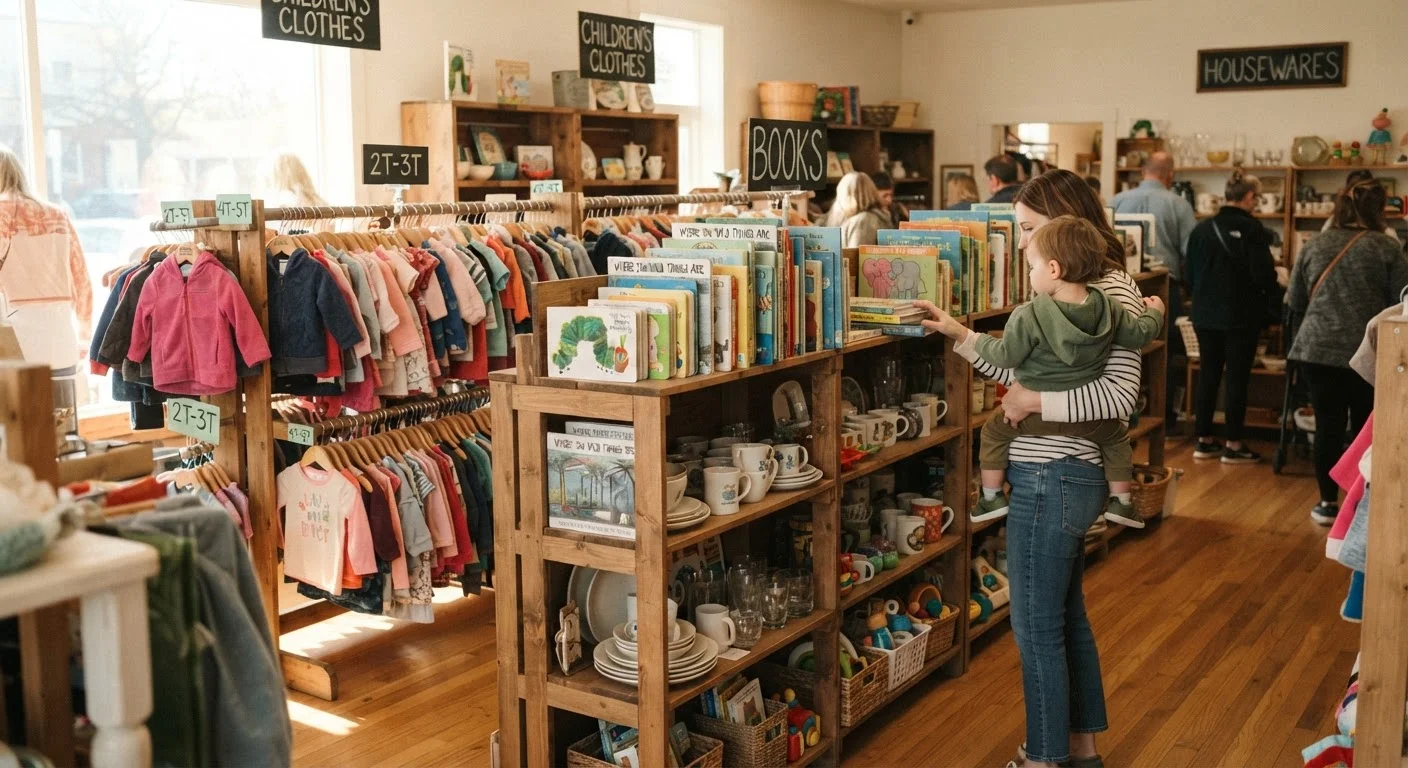
Photo: everythingtoday.com editorial
—— In This Article
Key Takeaways
- Thrift stores, online marketplaces, and Buy-Nothing groups each suit different items and family needs.
- Children's gear and clothing are among the strongest categories for second-hand value because kids outgrow things quickly.
- Safety inspection matters most for car seats, helmets, and any item with mechanical or electrical parts.
- Buy-Nothing groups cost nothing and often move fast, making them worth joining even if you use them occasionally.
- Combining channels gives families access to a wider range of items without over-relying on any single source.
Why second-hand works especially well for families
Children cycle through clothes, shoes, toys, and sports gear faster than almost any other household demographic. A jacket worn through one winter, a puzzle completed twice, a bike ridden for a single summer: these items often reach the resale market in genuinely good condition because they were barely used before the child outgrew them. That pattern gives family shoppers a consistent supply of lightly used goods at prices well below retail.
Second-hand shopping also pairs well with other money-saving habits. If you already use a structured approach to grocery savings, for instance, adding resale channels to your shopping routine fits the same mindset. See our practical couponing system for busy families for how to layer savings strategies without creating extra work.
The three main channels available to most American families are physical thrift stores, online resale marketplaces, and community-based Buy-Nothing groups. Each works differently, and knowing the practical differences helps you decide where to look first for any given item.
For children's clothing, shop one or two sizes ahead at thrift stores when you spot good condition pieces. Kids grow into them before you know it, and inventory at the size you need today may be thin.
Buying ahead of current size removes the pressure of finding something immediately and lets you take advantage of whatever is available during a given visit.
When picking up items from online resale or Buy-Nothing locally, bring a measuring tape for furniture and a phone charger for small electronics you want to test on the spot.
These two items prevent the most common errors in local pickup: furniture that does not fit and electronics that do not work.
Thrift stores: what to expect and how to shop them well
Physical thrift stores run by nonprofit organizations accept donated goods and resell them, typically with pricing far below retail. Inventory turns over constantly, so the selection on any given visit is unpredictable. That unpredictability is both the appeal and the limitation: you may find exactly what you need, or you may leave empty-handed.
Children's clothing sections at thrift stores tend to be large and well-stocked because donation rates in this category are high. Books, board games, small kitchen appliances, and basic furniture are other categories where thrift stores consistently deliver value. Electronics are more of a gamble since you usually cannot test them thoroughly in-store.
A few practical habits improve your thrift store results. Shopping mid-week tends to mean fresher inventory than weekends, when more shoppers have already picked through new arrivals. Visiting stores in higher-income zip codes often surfaces better-condition donations, though the stores themselves may price items slightly higher to reflect that. Going in with a short list of actual needs, rather than browsing without purpose, keeps spending disciplined.
Online resale marketplaces: the trade-offs
Online platforms let you search for specific items by category, size, condition, and price range, which removes much of the guesswork in thrift store browsing. The main platforms used by American families include local-pickup-focused apps and national shipping-enabled sites that handle payment and some buyer protections. Each platform has its own fee structure, which affects the seller's pricing and, indirectly, what buyers pay.
The convenience comes with trade-offs. You cannot inspect an item before committing unless you arrange a local pickup. Photos can hide wear, odors, or damage. Shipping adds cost to smaller purchases and can make a low-price find less of a deal by the time it arrives. For local pickup listings, meeting a stranger requires basic precautions: arrange daytime meetings in public or well-lit locations, and bring someone with you when picking up larger items.
Online resale works well for specific, higher-value items where condition matters and you can afford to wait: a specific stroller model, a set of musical instruments, or sporting gear your family plans to own rather than rent. The search function gives you access to a much larger pool of inventory than any single thrift store.
Buy-Nothing groups: the free layer of the resale world
Buy-Nothing groups are neighborhood-based communities, often organized through social media or dedicated apps, where members give items away for free. There is no buying or selling: everything offered is a gift. Members post items they no longer need, and other members request them. The groups are hyperlocal by design, meaning exchanges happen between neighbors and items are picked up nearby.
The free nature makes them appealing for items you only need briefly, items a child will quickly outgrow, or household goods you want to try before investing in a purchased version. Baby gear, children's books, seasonal decorations, garden tools, and craft supplies circulate frequently in active groups.
The limitation is timing and availability. You cannot predict what will appear, and popular items go quickly. Participating consistently, both giving and receiving, builds goodwill and visibility within the group. Families who use Buy-Nothing groups alongside thrift stores and online marketplaces tend to get the most out of each channel. Shopping second-hand is also a natural opportunity to involve children in conversations about value and needs versus wants.
What to inspect before you buy used
The inspection step is where second-hand shopping either pays off or creates problems. Most categories are low-risk with a basic visual check, but a few require closer attention.
- Clothing and shoes: check seams, zippers, buttons, and the soles of shoes. Fabric pilling or minor staining is usually fine; broken closures or torn seams are not worth the repair effort unless the item is otherwise exceptional.
- Furniture: look for structural stability, check drawer slides, and smell upholstered pieces carefully. Musty odors in fabric furniture are difficult to remove at home.
- Toys and games: confirm all pieces are present before buying a board game. Inspect battery compartments in electronic toys for corrosion.
- Small appliances: test in-store when the store permits it. Check cords for fraying.
Car seats, bike helmets, and other safety equipment deserve special attention. Car seats have expiration dates and may have been in a crash, which compromises their structure invisibly. Many child safety organizations recommend against buying these items second-hand unless you can verify their full history. Check the manufacturer label for the expiration date and ask the seller directly about any accidents.
For a broader look at when owning versus renting used gear makes sense for your family, the guide on renting versus owning recreational gear covers the cost math in more detail.
Mixing channels for the best results
No single channel covers everything. Thrift stores are good for spontaneous finds and clothing in a range of sizes. Online marketplaces are good for specific searches and higher-value items. Buy-Nothing groups are good for free, hyperlocal exchanges with no transaction friction. Using all three as the situation calls for it gives families access to the widest range of goods without relying on luck from any one source.
A practical approach: keep a short running list of items your household actually needs. When something appears on Buy-Nothing, take it. When you need something specific and condition matters, search online resale. Fill in gaps with thrift store visits when you have time to browse. That rhythm keeps second-hand shopping purposeful rather than impulsive, which is where the real savings accumulate. For more ways to stretch your household budget across all spending categories, the shopping hub has additional guidance.

Lifestyle Editorial Team
Lifestyle Editorial Team is the collective byline for our editorial team and contributor network. Articles published under this byline or an editorial pen name are researched, written, and reviewed according to our editorial standards for clarity, consistency, and independence before publication.
View author profile