
Road Trip America: Stretching Your Family Travel Budget Across State Lines
Learn how American families can plan memorable, affordable road trips by managing fuel, lodging, and food costs without sacrificing fun.
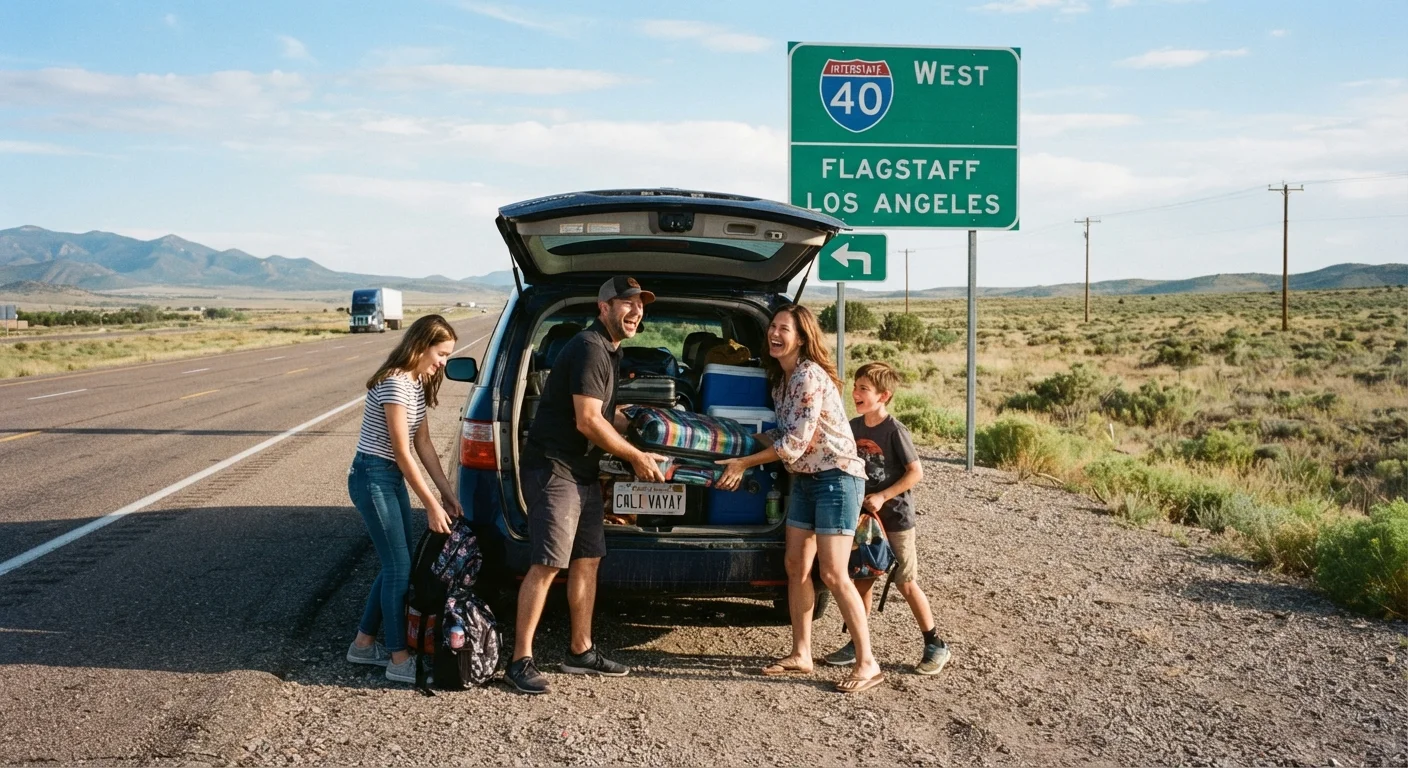
Photo: everythingtoday.com editorial
—— In This Article
Key Takeaways
- Choosing circular or loop routes reduces backtracking fuel costs significantly.
- Packing a cooler with prepared food is one of the most reliable ways to reduce daily trip spending.
- State and national park passes often deliver more value than individually priced attractions.
- Booking lodging mid-week or in smaller gateway towns near popular destinations lowers nightly rates.
- Road trips give families flexibility that fixed-itinerary vacations cannot match.
Why road trips work for budget-conscious families
Flying a family of four across the country often costs more than a week of driving the same distance. Road trips remove several fixed costs: airline tickets, baggage fees, airport parking, and the car rental that typically waits at the other end. The family vehicle becomes the transportation and the luggage system at once.
There is a flexibility factor too. When you drive, you can adjust your pace, skip a town that doesn't interest anyone, or stay an extra night somewhere that does. That adaptability is hard to put a dollar figure on, but it regularly saves money because families aren't locked into prepaid, nonrefundable arrangements. If you're newer to planning trips like this, this starter guide for family trip planning covers core concepts worth reviewing before you map a route.
Road trips also scale well with family size. The per-person cost of a drive does not rise the way airfare does. A family of five pays the same fuel and lodging costs as a family of four for most of the trip.
Planning your route to cut costs
The shape of a route has a direct effect on the budget. A loop that returns you to your starting point lets you avoid repositioning costs and one-way fuel spikes. Point-to-point routes that require a long backtrack on the same highway waste both fuel and time.
Consider building the route around free or low-cost anchor destinations, then fill in the driving days with stops that don't require paid admission. Public lands, state forests, river corridors, and many historic downtown districts are free to explore. The comparison between national parks and theme parks is worth reading before you decide what kind of experiences anchor your trip.
For families open to lesser-known spots, underrated U.S. cities often have lower lodging and food costs than well-publicized destinations while still offering museums, trails, and local character worth a stop.
Build one or two unscheduled buffer days into any road trip longer than five days. Unplanned detours to roadside state parks or small-town diners rarely add cost and often produce the memories families talk about longest.
Rigid itineraries create pressure to skip free stops to stay on schedule, which paradoxically increases spending by pushing families toward paid, prepaid anchor attractions.
Check whether your auto insurance and roadside assistance coverage is current before departure, and confirm the policy covers the states on your route. A single tow in a remote area can cost several hundred dollars out of pocket.
Breakdown costs are one of the most common unplanned expenses on road trips and one of the simplest to prepare for with a quick policy review.
Keeping fuel costs under control
Fuel is usually the single largest variable cost on a road trip. The most direct way to control it is to know your vehicle's real-world highway fuel economy before departure, then calculate a per-mile fuel budget using current regional prices. That number makes route trade-offs concrete: an extra 200 miles to see a specific attraction has a real dollar cost you can weigh.
Driving at steady highway speeds rather than accelerating aggressively on rural roads can meaningfully improve fuel economy. Roof cargo carriers add aerodynamic drag; packing inside the vehicle when possible costs nothing and saves fuel over a long trip.
Gas prices vary by state and by distance from a highway interchange. Stations in rural areas on secondary roads often price lower than those positioned at major interstate exits. A fuel-tracking app can show price patterns along your planned corridor, though prices change daily so any app data is an estimate rather than a guarantee.
Lodging strategies that make a real difference
Lodging is the second major budget lever on a road trip. Traveling mid-week lowers rates at most properties compared to Friday and Saturday nights. Staying just outside a popular destination, in a smaller neighboring town, consistently costs less than staying at the destination itself.
Campgrounds at state parks and national forests are among the least expensive overnight options available. Many have electrical hookups, restrooms, and shower facilities. Reserving a few weeks ahead for summer travel is practical, since popular sites fill. A pre-trip planning checklist can help you track reservation windows alongside document and packing tasks so nothing is missed.
Extended-stay properties that include a kitchenette cost more per night than a standard room but allow families to prepare some meals in the room, which often produces net savings over two or more nights compared to eating every meal at restaurants.
Feeding a family on the road without overspending
Restaurant meals multiply quickly when a family eats three times a day. A well-stocked cooler can replace breakfast and lunch entirely on driving days, with only dinner at a sit-down or counter-service spot. Preparing sandwiches, fruit, hard-boiled eggs, and snacks at the start of each travel day takes roughly 15 minutes and can cut daily food spending significantly compared to stopping at highway food courts.
Meal planning strategies for tight budgets translate directly to road trip food prep: batch-cook proteins before departure, portion snacks into reusable containers, and stock items that keep well without refrigeration for days two and three of the cooler cycle.
Grocery stores along the route are a practical resupply point. A 20-minute stop at a regional grocery chain typically provides fresher, less expensive options than a highway convenience stop, and it lets the family restock fruit, drinks, and ready-to-eat items that the cooler has depleted.
Activities and attractions that don't drain the budget
The America the Beautiful Annual Pass covers entry to national parks and federal recreational lands for a full year. For a family planning to visit two or more national parks, the pass typically pays for itself before the second entry gate. It covers the entire carload, not per-person fees.
Many states offer their own annual park passes that cover state-run sites including beaches, forests, and historic properties. Checking the state parks website before entering a state takes a few minutes and can reveal pass options that are worth purchasing for a multi-day visit.
Free activities are easier to find than families often expect. Free and low-cost family activities include nature trails, river access points, downtown historic districts, and library programs that sometimes run even in summer. For families considering coastal driving routes, this guide to East and West Coast destinations breaks down costs and experiences by region so you can match the route to your budget. State welcome centers, which are free to stop at, often carry discount coupons for local attractions and provide current maps at no cost.

Travel Editorial Team
Travel Editorial Team is the collective byline for our editorial team and contributor network. Articles published under this byline or an editorial pen name are researched, written, and reviewed according to our editorial standards for clarity, consistency, and independence before publication.
View author profile