
Underrated U.S. Cities Worth a Family Weekend Getaway
Twelve lesser-known American cities that offer rich culture, kid-friendly attractions, and lower visitor costs than their famous counterparts.
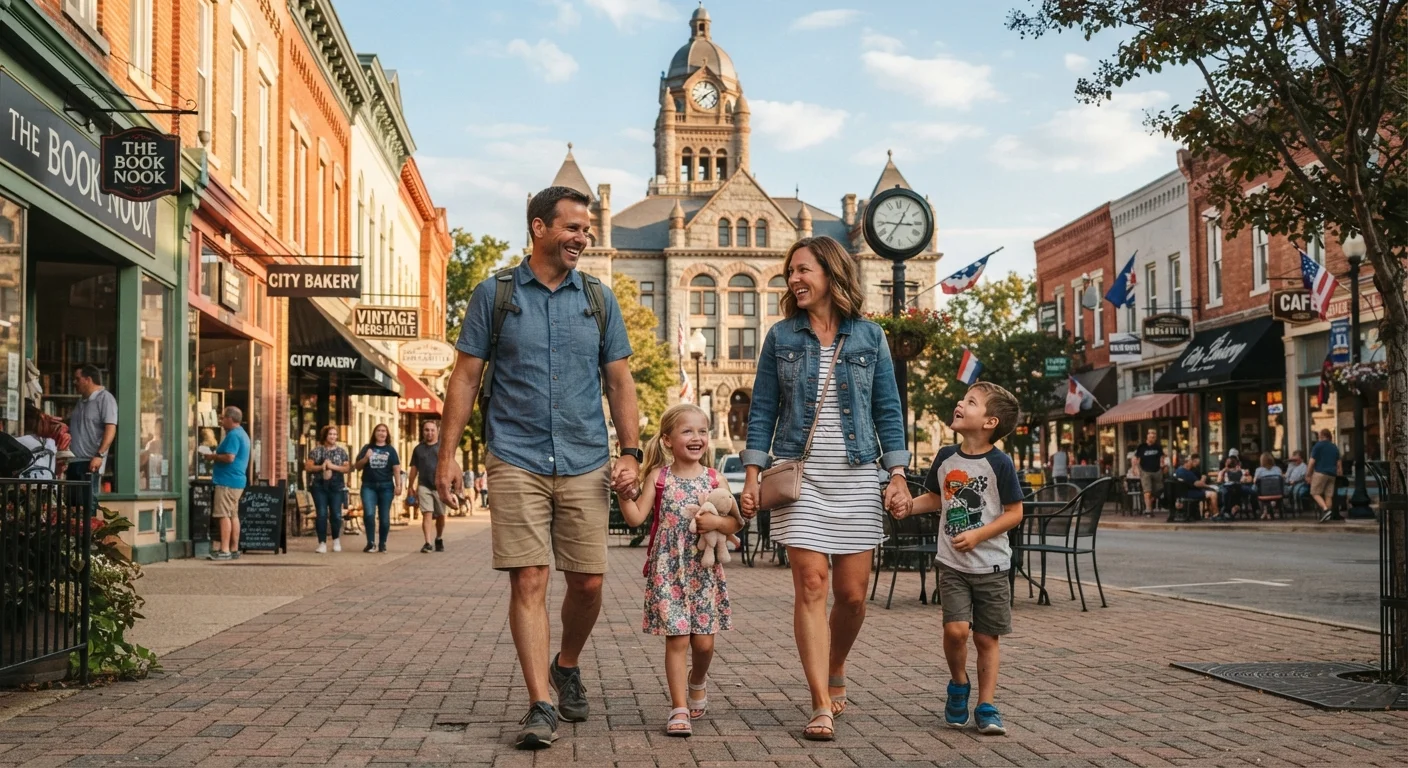
Photo: everythingtoday.com editorial
—— In This Article
Key Takeaways
- Many mid-sized U.S. cities offer museums, parks, and cultural attractions at a fraction of the cost of major tourist hubs.
- Lodging and dining in underrated cities typically runs 30 to 50 percent lower than in popular coastal destinations.
- Shorter drives and fewer crowds mean families spend more time on experiences and less time on logistics.
- Free and low-admission attractions, including state parks and public museums, anchor most of these destinations.
- Pairing a weekend getaway with a regional road trip can stretch your family travel budget even further.
Why skip the obvious choices
Orlando, New York, and San Francisco are perfectly enjoyable, but their visitor costs are also perfectly brutal on a family budget. Hotel rates in those cities can easily top $300 a night, parking fees alone can swallow $40 a day, and popular attraction tickets frequently run $30 to $60 per person. A family of four can spend $1,500 or more in a single weekend before accounting for meals.
The cities on this list take a different shape. Each has genuine cultural and recreational depth, kid-friendly infrastructure, and a price floor that makes a spontaneous weekend feel manageable rather than stressful. If you're new to planning these kinds of trips, the family travel budget starter guide covers the core cost decisions worth thinking through before you book anything.
These twelve destinations span the country's geography and climate, so at least a few fall within a reasonable drive of wherever your family is based. None of them require a flight to reach from a large portion of the U.S. population, which keeps the trip from ballooning in cost before it even starts.
Chattanooga, Tennessee
Chattanooga sits along the Tennessee River at the base of Lookout Mountain, and families consistently find more to do here than a single weekend allows. The Tennessee Aquarium on the riverfront is one of the largest freshwater aquariums in the country and charges well below what comparable attractions cost in coastal cities. The city's free Riverwalk path connects parks, playgrounds, and public art installations for miles. Rock City atop Lookout Mountain and the Ruby Falls underground waterfall are both worth the modest admission. Hotels and vacation rentals here run noticeably lower than Nashville, which draws most of Tennessee's tourism attention.
The Tennessee Aquarium charges well below what comparable coastal attractions typically cost.
Omaha, Nebraska
Omaha is a city that families from surrounding states frequently overlook, and that's genuinely their loss. The Henry Doorly Zoo and Aquarium ranks among the most respected zoos in the country by professional animal welfare standards, and admission prices are far lower than zoos in major metro areas. The Old Market district has walkable restaurants and street-level entertainment that kids genuinely enjoy. The Durham Museum, housed in a restored 1930s train station, has hands-on exhibits and charges a modest family admission. Omaha hotel rates on weekends tend to be some of the most affordable of any U.S. city its size.
Henry Doorly Zoo admission runs far lower than comparable zoos in major metro areas.
Asheville, North Carolina
Asheville draws attention for its arts scene and mountain setting, but it remains far less expensive than cities with similar cultural reputations on the coasts. The Blue Ridge Parkway, which runs near the city, is free to drive and has overlooks and short hiking trails suitable for children of most ages. Downtown Asheville's art galleries, street performers, and public murals cost nothing to enjoy. The Asheville Museum of Science and Nature has a small but engaging fossil collection, and the North Carolina Arboretum in nearby Bent Creek is free to enter on foot. Families who enjoy outdoor mornings paired with walkable town evenings find the format works particularly well here.
The Blue Ridge Parkway near Asheville is free to drive and has short trails for kids of most ages.
Green Bay, Wisconsin
Green Bay is associated almost entirely with football in most people's minds, but the city has a real weekend's worth of family experiences outside of game weekends. The National Railroad Museum has one of the largest collections of historic locomotives in the U.S. and charges a low family admission. Bay Beach Wildlife Sanctuary is a free, city-operated wildlife rehabilitation center with native Wisconsin animals that kids can observe up close. Bay Beach Amusement Park, also city-operated, has rides priced at under a dollar each, which is genuinely unusual for any amusement attraction. Lodging costs in Green Bay are among the more affordable in the Great Lakes region, except during Packers home game weekends when prices spike.
Bay Beach Amusement Park charges under a dollar per ride, a rarity for any U.S. amusement destination.
El Paso, Texas
El Paso sits at the western tip of Texas where the Franklin Mountains cut through the city, and it offers a mix of outdoor adventure and cross-cultural history that few U.S. cities can match. Franklin Mountains State Park, the largest urban state park in the country by area, has trails graded for different fitness levels and charges a low day-use fee. The El Paso Museum of Art and the El Paso Museum of History both have free general admission. The city's food scene, built around Tex-Mex and New Mexican traditions, is genuinely good and almost always affordable. Hotel rates in El Paso rank among the lowest of any Texas city, making it a practical base for exploring the region.
Franklin Mountains State Park is the largest urban state park in the country by area.
Savannah, Georgia
Savannah's 22 public squares form one of the most walkable historic districts in the South, and exploring them costs nothing beyond comfortable shoes. Forsyth Park has a large fountain, shaded paths, and open lawn space that families use freely throughout the day. The Savannah Children's Museum, set inside a historic railroad building, has indoor and outdoor play areas at a low family admission. River Street along the waterfront has free-to-watch river traffic and street entertainment, though the shops and restaurants there vary widely in price. Savannah is more affordable than Charleston for comparable accommodations, and many families find the historic character equally engaging.
Savannah's 22 public squares form one of the most walkable free historic districts in the South.
Spokane, Washington
Spokane is the second-largest city in Washington but gets a small fraction of the visitor attention that Seattle draws, which keeps prices in a more accessible range. Riverfront Park, rebuilt around the infrastructure from the 1974 World's Fair, sits at the center of downtown and has a free public carousel, walking paths, and views of the Spokane Falls right inside the city. The Northwest Museum of Arts and Culture charges a modest family admission and covers the Indigenous and pioneer history of the Inland Northwest in real depth. Families who enjoy hiking will find Mount Spokane State Park and the trails of the Dishman Hills within a short drive. Spokane hotel rates typically run well below Seattle for comparable properties.
Spokane Falls runs directly through downtown Riverfront Park, free to visit at any time.
Burlington, Vermont
Burlington is a small city with a disproportionate amount to do for families who enjoy outdoor activity and local food culture. The Church Street Marketplace, a pedestrian shopping and dining district, is lively on weekends and free to walk. Lake Champlain waterfront parks have public swimming beaches in summer and walking paths year-round. ECHO, Leahy Center for Lake Champlain, is a science and nature museum on the waterfront with strong programming for school-age children and reasonable admission. Vermont's Northeast Kingdom and the Green Mountains are within a short drive for families who want hiking or, in winter, affordable ski access at smaller mountains. Burlington itself is compact enough that families rarely need to drive between attractions.
Burlington's waterfront parks have free public swimming beaches in summer and open walking paths year-round.
Tulsa, Oklahoma
Tulsa has invested significantly in its public spaces over the past decade, and families who visit find a city with real walkable infrastructure and a strong museum culture. The Gathering Place, a privately funded public park on the Arkansas River, is free to enter and has playgrounds, paddleboat rentals, and splash pads that children gravitate toward immediately. The Philbrook Museum of Art has grounds that families can enjoy without going through the galleries, and the museum itself has a family admission rate. The Oklahoma Aquarium in nearby Jenks has a strong shark exhibit and prices its tickets below national aquarium averages. Tulsa hotel rates are competitive with other Southern cities and drop further when booked mid-week.
The Gathering Place, a major riverside public park, is free to enter with playgrounds and splash pads.
Duluth, Minnesota
Duluth sits at the western end of Lake Superior where the terrain is dramatic and the air is noticeably cooler than inland cities in summer, making it a natural fit for families who want outdoor activity without intense heat. The free Aerial Lift Bridge at the Canal Park district is one of the most photographed structures in the Midwest and puts on a visible show every time a large vessel passes through. The Great Lakes Aquarium, the only all-freshwater aquarium in the country, charges a reasonable family admission. Enger Park has a free observation tower with panoramic lake views. Families should note that Duluth weather can change quickly and cool ocean-like temperatures on the lake can persist even in July, so packing layers is worth doing regardless of the forecast.
Duluth's Aerial Lift Bridge at Canal Park is free to watch and visible to anyone walking the district.
Little Rock, Arkansas
Little Rock is a state capital with a compact, navigable downtown and several genuinely strong family attractions. The William J. Clinton Presidential Library has permanent and rotating exhibits and charges a low family admission. The Arkansas Museum of Natural Resources in nearby Smackover covers oil history in an accessible way that older kids find engaging, though the main Little Rock children's museum is more appropriate for younger children. Riverfront Park along the Arkansas River has free walking paths, playgrounds, and views of the river traffic. Arkansas is one of the more affordable states for family lodging on average, and Little Rock's hotel prices reflect that. The city also has easy freeway access for families driving in from surrounding states.
The Clinton Presidential Library charges a low family admission and has rotating exhibits worth planning around.
Santa Fe, New Mexico
Santa Fe carries a reputation for luxury galleries and upscale dining, but families who look past that surface find a city with free public art, accessible history, and outdoor space that costs very little to use. The New Mexico History Museum adjacent to the Palace of the Governors has strong exhibits on Indigenous Southwest history and charges a reasonable family admission; children under 16 enter free. Canyon Road's gallery district is an outdoor walking experience that costs nothing beyond comfortable footwear. Meow Wolf's House of Eternal Return is a ticketed immersive art installation that genuinely captivates children and adults alike, though it does require advance planning. Hyde Memorial State Park, just outside the city, has picnic areas and short trails accessible for free. Families willing to stay slightly outside the Plaza area will find lodging rates that are much more manageable.
Children under 16 enter the New Mexico History Museum free, and Canyon Road galleries cost nothing to walk.
How to get the most from any of these cities
Arrive Friday, leave Sunday afternoon
Checking in on Friday evening instead of Saturday morning gives your family a full extra day without paying for an additional night. Most mid-sized city attractions are open by 9 a.m. Saturday, so an early start on day two can cover a surprising amount of ground. Leaving Sunday afternoon, rather than evening, helps avoid the fatigue that comes with arriving home late. Many families find this schedule easier on young children than longer trips.
Arrival timing matters more than most families realize. Reaching a mid-sized city on Friday evening rather than Saturday morning gives you a full extra day without paying for an additional night. Many free public attractions, including riverfronts, historic districts, and public markets, are at their liveliest on Saturday mornings.
Public libraries, botanical gardens, state capitol buildings, and children's science museums in these cities often charge nothing or ask for a modest suggested donation. Building the itinerary around those free anchors, then layering in one or two paid experiences, keeps the weekend feeling full without a painful bill at checkout. You can find more ideas for stretching activity budgets in our roundup of free and low-cost family activities.
If one of these destinations sits within a few hours of another, consider combining them into a longer loop. That approach works especially well for families who enjoy driving together. Our guide to road-tripping across state lines goes deep on managing fuel, food, and lodging costs on multi-stop itineraries. For a direct comparison with pricier coastal alternatives, see our overview of what families can expect from coastal destinations.

Travel Editorial Team
Travel Editorial Team is the collective byline for our editorial team and contributor network. Articles published under this byline or an editorial pen name are researched, written, and reviewed according to our editorial standards for clarity, consistency, and independence before publication.
View author profile