
Affordable Calcium Sources Beyond the Dairy Aisle
Dairy is not the only path to calcium. Explore budget-friendly plant and whole-food sources that work well in family meals.
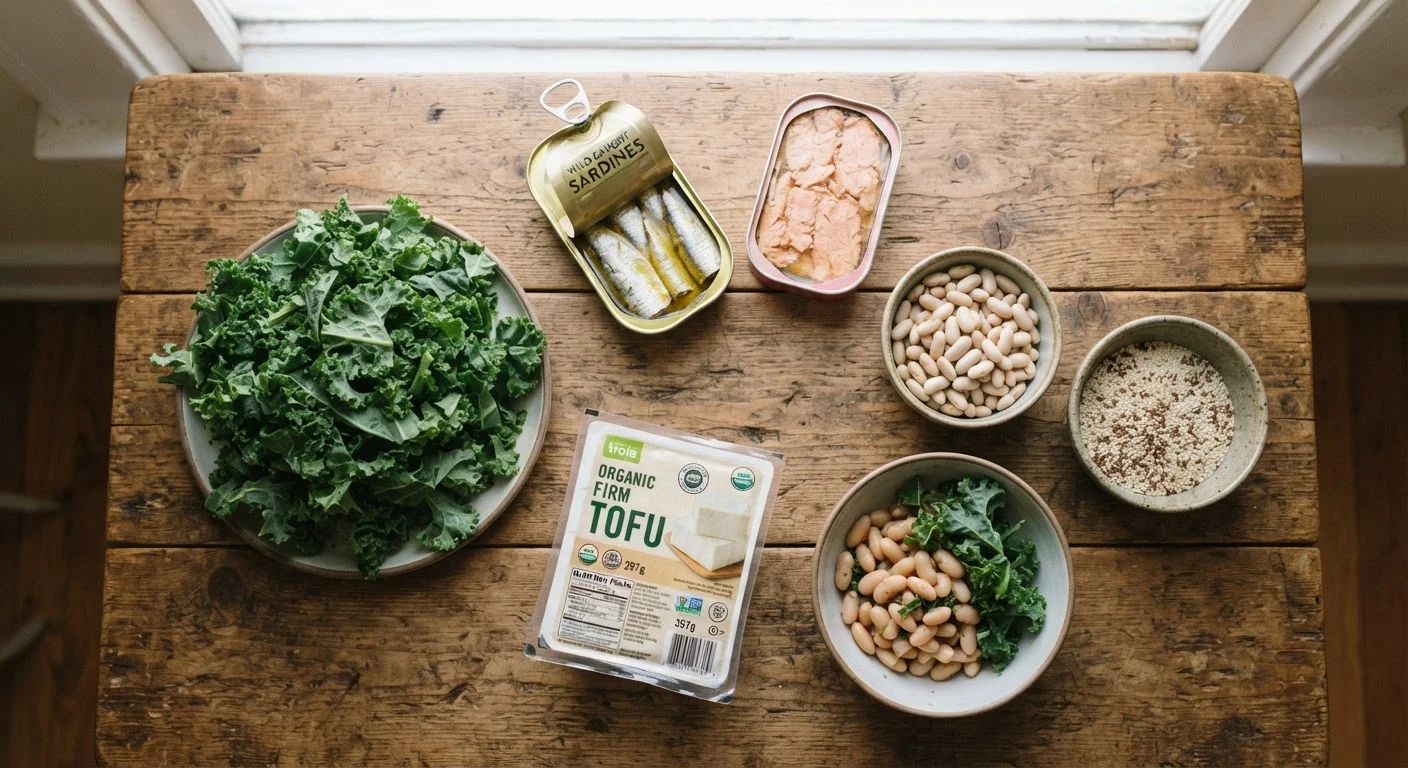
Photo: everythingtoday.com editorial
—— In This Article
Key Takeaways
- Several plant and whole foods deliver meaningful calcium without the cost of dairy products.
- Canned fish with edible bones, dried legumes, and certain leafy greens are among the most affordable options.
- Absorption varies by food, so eating a variety of calcium sources across the day helps meet daily needs.
- Vitamin D supports calcium absorption, and pairing foods accordingly can improve overall intake.
- Families with specific calcium concerns should consult a registered dietitian or healthcare provider.
Why looking beyond dairy makes sense for many families
Dairy products are a familiar calcium source, but they are not the only one, and for families managing lactose intolerance, dairy allergies, or tight grocery budgets, relying on them exclusively is not always practical. The good news is that several affordable, widely available foods supply calcium in amounts that matter. The USDA Dietary Guidelines acknowledge plant-based and fortified foods as legitimate contributors to daily calcium intake.
Adults generally need around 1,000 mg of calcium per day, while children and teenagers often need more to support bone development. A single food rarely covers the full requirement, so variety matters. The list below covers sources that appear regularly at grocery stores, store well, and fit naturally into family cooking. For a fuller picture of building nutritious meals on a budget, see our meal planning guide for families.
This article is for general informational purposes only and is not medical advice. Consult a qualified healthcare professional for personalized dietary guidance, especially for children, pregnant individuals, or anyone managing a health condition.
Pairing calcium foods with vitamin C
Vitamin C does not directly increase calcium absorption, but eating a varied diet that includes vegetables and fruits alongside calcium-rich foods supports overall nutrient intake. Many of the leafy greens listed here also contain vitamin C, which makes them doubly useful in a family meal. Focus on variety rather than precise nutrient pairing at every meal.
Affordable calcium sources to add to your grocery list
Canned salmon and sardines with bones
Canned salmon and sardines that include soft, edible bones are among the most calcium-dense affordable foods available. A 3-ounce serving of canned salmon with bones can supply roughly 180 to 200 mg of calcium. Sardines with bones offer a similar range. Both products cost well under typical fresh fish prices and have a long shelf life, making them practical pantry staples. They work in pasta, salads, and simple grain bowls.
Canned fish with edible bones can deliver close to 200 mg of calcium per serving at low cost.
Dried and canned white beans
White beans, including navy beans and great northern beans, contain around 120 to 130 mg of calcium per cooked half-cup serving. Dried versions cost very little per pound and yield many servings. Canned versions add convenience without a major price jump. White beans blend well into soups, work as a simple side dish with olive oil and herbs, and can be mashed as a spread. They also supply protein and fiber, which makes them a nutritionally dense purchase. If you want to explore how legumes fit into children's protein needs, plant protein for growing kids covers that topic in detail.
White beans supply over 120 mg of calcium per half-cup serving, alongside fiber and protein.
Cooked bok choy and kale
Bok choy and kale are two leafy greens with calcium levels that genuinely add up. A cooked half-cup of bok choy provides roughly 80 mg of calcium with relatively low oxalate content, meaning the body absorbs a good portion of what is present. Cooked kale delivers a similar amount. Both greens are inexpensive when purchased fresh in season, and frozen kale is widely available at lower prices year-round. They cook quickly, which makes them realistic for weeknight meals.
Bok choy and kale have low oxalate levels, so the body absorbs their calcium more efficiently than from some other greens.
Calcium-set tofu
Firm tofu made with calcium sulfate as the coagulant can contain 200 mg or more of calcium per half-cup serving, though the exact amount varies by brand and preparation. The label will list calcium sulfate in the ingredient list if it was used. Tofu is versatile enough to appear in stir-fries, soups, and scrambles. It is generally more affordable than meat per serving, and when bought in bulk or on sale, the cost-per-serving drops further. Check the Nutrition Facts panel for the calcium percentage to confirm the amount in a specific product.
Calcium-set tofu can provide 200 mg or more of calcium per half-cup serving, making it one of the densest plant sources available.
Fortified non-dairy milks
Many non-dairy milks, including soy milk and oat milk, are fortified to contain roughly 300 mg of calcium per cup, which is comparable to cow's milk. Soy milk has additional value because it supplies complete protein. These products vary in price, but store-brand or shelf-stable versions tend to cost less than refrigerated name-brand options. Checking the Nutrition Facts label is necessary because not all non-dairy milks are fortified to the same level, and some contain little calcium unless it has been added.
Fortified soy and oat milks can match dairy's calcium content per cup when the label confirms fortification.
Sesame seeds and tahini
Sesame seeds contain around 88 mg of calcium per tablespoon, and tahini, which is ground sesame paste, delivers a similar amount in each spoonful. These amounts are smaller per serving than some other sources on this list, but sesame products are easy to add to existing meals without preparation effort. Tahini works as a dip, a sauce base, or a spread, and sesame seeds can go on salads, grain dishes, and stir-fries. A jar of tahini is relatively low-cost and stores well in the refrigerator for weeks.
Sesame seeds and tahini offer a practical way to add calcium to everyday meals with no cooking required.
Getting the most from these foods
Calcium absorption depends on more than how much you eat. Oxalates in some foods, such as spinach, can limit how much calcium your body uses from that source. Phytates in whole grains and legumes have a similar effect, though soaking dried beans before cooking reduces phytate content somewhat. Spreading calcium-rich foods across meals, rather than eating them all at once, also tends to support better absorption.
Vitamin D is necessary for calcium absorption. Many of the foods listed above contain little vitamin D on their own, so consider how your family gets this nutrient, whether through sun exposure, fortified foods, or on the advice of a healthcare provider. If you are also thinking about how plant proteins fit into your children's diet, our article on plant protein vs. animal protein for growing kids covers the nutritional comparison in practical terms. Similarly, building meals around affordable whole grains alongside these calcium sources helps round out family nutrition without added cost. See whole grains on a budget for specific options and cooking ideas.

Nutrition Editorial Team
Nutrition Editorial Team is the collective byline for our editorial team and contributor network. Articles published under this byline or an editorial pen name are researched, written, and reviewed according to our editorial standards for clarity, consistency, and independence before publication.
View author profile