
Low-Maintenance Perennials That Survive on Minimal Water
A curated look at hardy perennial plants suited to American home gardens that need little water, little care, and almost no annual replanting cost.
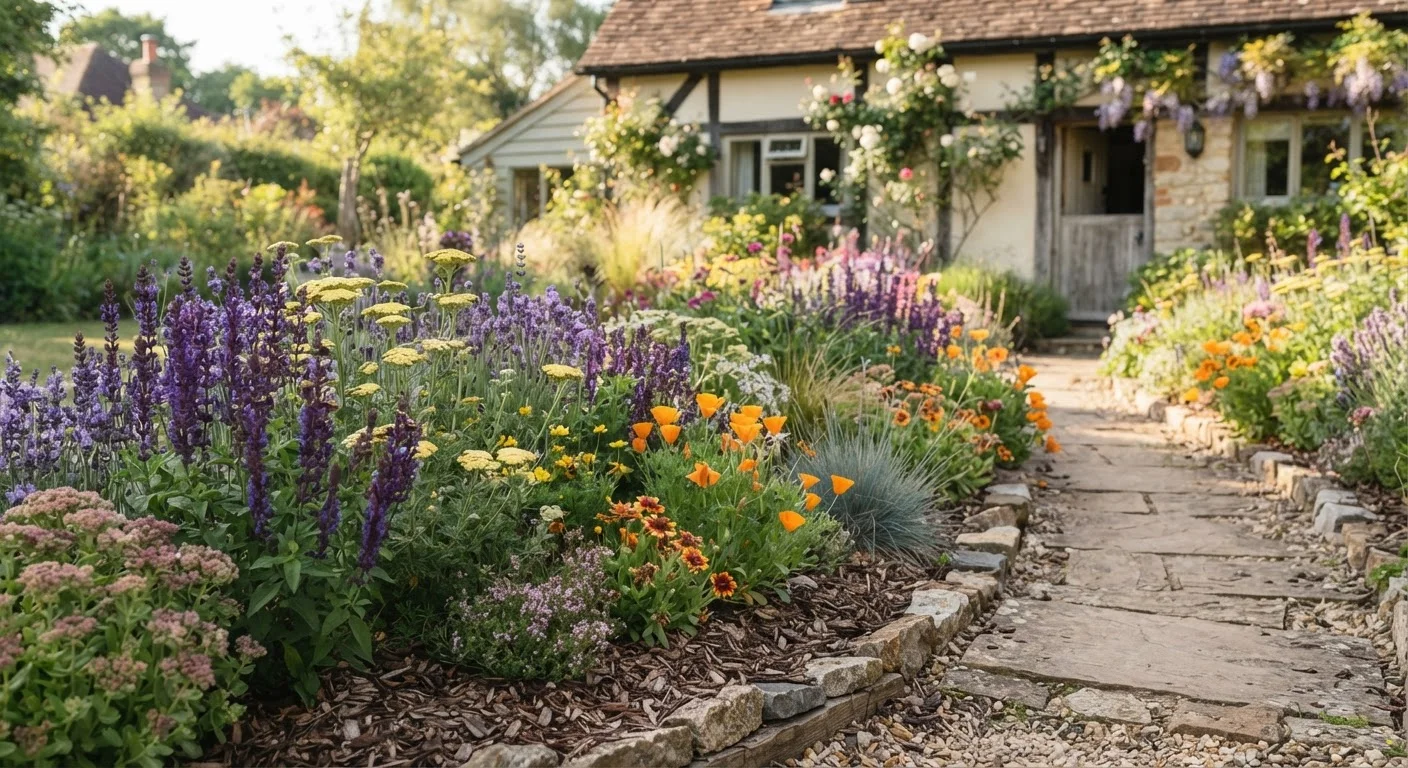
Photo: everythingtoday.com editorial
—— In This Article
Key Takeaways
- Drought-tolerant perennials return every year, cutting the cost of annual replanting.
- Most of these plants thrive with deep, infrequent watering rather than frequent light sprinkles.
- Mulching around perennials reduces soil moisture loss and cuts watering frequency noticeably.
- Many drought-tolerant varieties spread slowly over time, giving you more plants for free.
- Matching a plant to your USDA hardiness zone is the single best way to avoid losses.
Why low-water perennials make financial sense
Annual flowers look great at the nursery, but you pay for them every spring. Perennials come back on their own, so a one-time purchase can give you years of color. When you pair that with plants that need little supplemental water, you also trim your water bill and cut the time you spend dragging a hose around the yard.
That combination, low cost to maintain and low water demand, is what makes drought-tolerant perennials worth knowing. The plants below are widely available across the US, tolerate a range of soil types, and survive dry stretches without emergency care. Growing conditions vary by region, so always check your USDA Plant Hardiness Zone before buying, and ask your local cooperative extension office if you are unsure what works in your soil.
For gardeners curious about where to put these plants, our guide to raised beds vs. in-ground planting covers the long-term cost difference between those two approaches.
Black-eyed Susan (Rudbeckia hirta)
Black-eyed Susans are native to much of North America, which partly explains why they do so well with little help. They handle poor, dry soil, full sun, and weeks without rain once established. Plants bloom from midsummer into fall, producing the familiar golden-yellow flowers with dark centers that hold up even in summer heat.
They spread by self-seeding, so a small initial planting can fill a bed over a few years at no extra cost. Deadheading (removing spent flowers) slows that spread if you want to keep the planting contained. Hardiness zones 3 through 9 cover most of the continental US, making this one of the most broadly adaptable choices on this list.
Black-eyed Susans self-seed freely, giving you more plants each year at no added cost.
Lavender (Lavandula angustifolia)
Lavender comes from the dry hillsides of the Mediterranean, so it is genuinely built for low-water conditions. It needs well-drained soil more than anything else. Standing water around the roots will kill it faster than drought will. In the right spot, it handles hot, dry summers with minimal irrigation once the root system is established after the first season.
Beyond its drought tolerance, lavender attracts pollinators, which benefits nearby vegetable and fruit plants. It is hardy in zones 5 through 8 for most common varieties, though some cultivars extend that range. In zones outside those limits, growing it in a container that can be sheltered in winter is a practical workaround. Our container gardening guide has practical details on that approach.
Lavender needs well-drained soil above all else: drought is far less of a threat than wet roots.
Coneflower (Echinacea purpurea)
Coneflowers are among the most forgiving perennials you can plant. They tolerate drought, clay soil, heat, and humidity, which covers a wide range of American garden conditions. Flowers appear from early summer through fall in shades of purple, pink, white, and orange depending on the variety. Leaving the seed heads in place through winter feeds birds and reduces the need to buy birdseed.
Coneflowers also divide well. After a few years, you can dig up a mature clump in spring or fall, split it into sections, and replant each section as a new plant. That free propagation is one of the clearest ways a low-maintenance perennial reduces long-term gardening costs. Hardy in zones 3 through 9.
Dividing a mature coneflower clump gives you several new plants at no cost.
Russian sage (Perovskia atriplicifolia)
Russian sage produces tall, airy spikes of lavender-blue flowers from midsummer into fall. It handles poor soil, reflected heat from pavement and walls, and extended dry periods with little complaint. The silvery stems remain attractive even in winter, which means the plant provides visual interest for most of the year without any input from you.
It does best in full sun and well-drained soil. In heavy clay, amending the planting area with coarse sand or grit before planting helps drainage considerably. Hardy in zones 4 through 9. Cutting stems back to about 6 inches in early spring is the main annual maintenance task it requires.
Russian sage handles poor soil, heat, and dry spells, and it looks good through winter.
Yarrow (Achillea millefolium)
Yarrow is one of the toughest plants you can put in a dry, sunny spot. It grows in poor soil where many ornamentals struggle, it tolerates drought well once established, and it spreads steadily to fill gaps in a planting. Flowers come in white, yellow, pink, and red depending on the variety, and they dry well if you want to bring them indoors.
The main thing yarrow does not tolerate is shade or wet feet. In rich, moist soil it tends to flop over and can become weedy. In lean, dry soil it stays compact and behaves well. Hardy in zones 3 through 9, and it can be divided every few years the same way coneflowers can, giving you additional plants for free.
In lean, dry soil yarrow stays compact and spreads to fill gaps without extra planting.
Sedum (Hylotelephium spectabile, formerly Sedum spectabile)
Upright sedums, sometimes called stonecrop, store water in their thick, fleshy leaves. That adaptation means they coast through dry stretches that would stress most garden plants. They bloom in late summer and fall when many other perennials are winding down, producing flat-topped flower clusters in pink, red, and white that attract late-season pollinators.
Sedums grow slowly enough that they rarely become invasive, and they are nearly pest-free. They work well along walkways, in rock gardens, or at the front of a border. Hardy in zones 3 through 9. The only real maintenance is cutting back dead stems in early spring before new growth appears.
Sedums store water in their leaves, coasting through dry periods that stress most garden plants.
Getting the most out of drought-tolerant perennials
Buying the right plants is only part of the equation. How you plant them determines whether they actually survive dry spells. A few practices make a real difference.
Work a 2- to 3-inch layer of organic mulch around the base of each plant. Mulch slows evaporation from the soil surface, which means the roots stay moist longer after rain or watering. Shredded leaves from your own yard are free and work well.
Water deeply and less often rather than lightly every day. Deep watering pushes moisture down into the soil, which trains roots to grow deeper where water stays longer. Shallow daily watering keeps roots near the surface where they dry out fast.
Group plants by water needs
Placing all your drought-tolerant perennials in one area of the yard makes watering more efficient. You can let that zone go longer between waterings without worrying that thirstier plants nearby are suffering. Over time, a well-grouped planting can reduce the total minutes you spend irrigating each week.
Give new transplants a full season of more regular watering before you back off. Most drought-tolerant perennials reach their full resilience only after the root system is established, which usually takes one growing season.
If you want to extend this approach to containers, our container gardening on a budget guide covers soil mixes and vessel choices that hold moisture efficiently without overspending.

Home & Garden Editorial Team
Home & Garden Editorial Team is the collective byline for our editorial team and contributor network. Articles published under this byline or an editorial pen name are researched, written, and reviewed according to our editorial standards for clarity, consistency, and independence before publication.
View author profile