
Store Brands vs. Name Brands: Where the Quality Gap Is Real and Where It Isn't
Not all generic products are equal. Explore which categories store brands match name brands and where the difference genuinely matters.
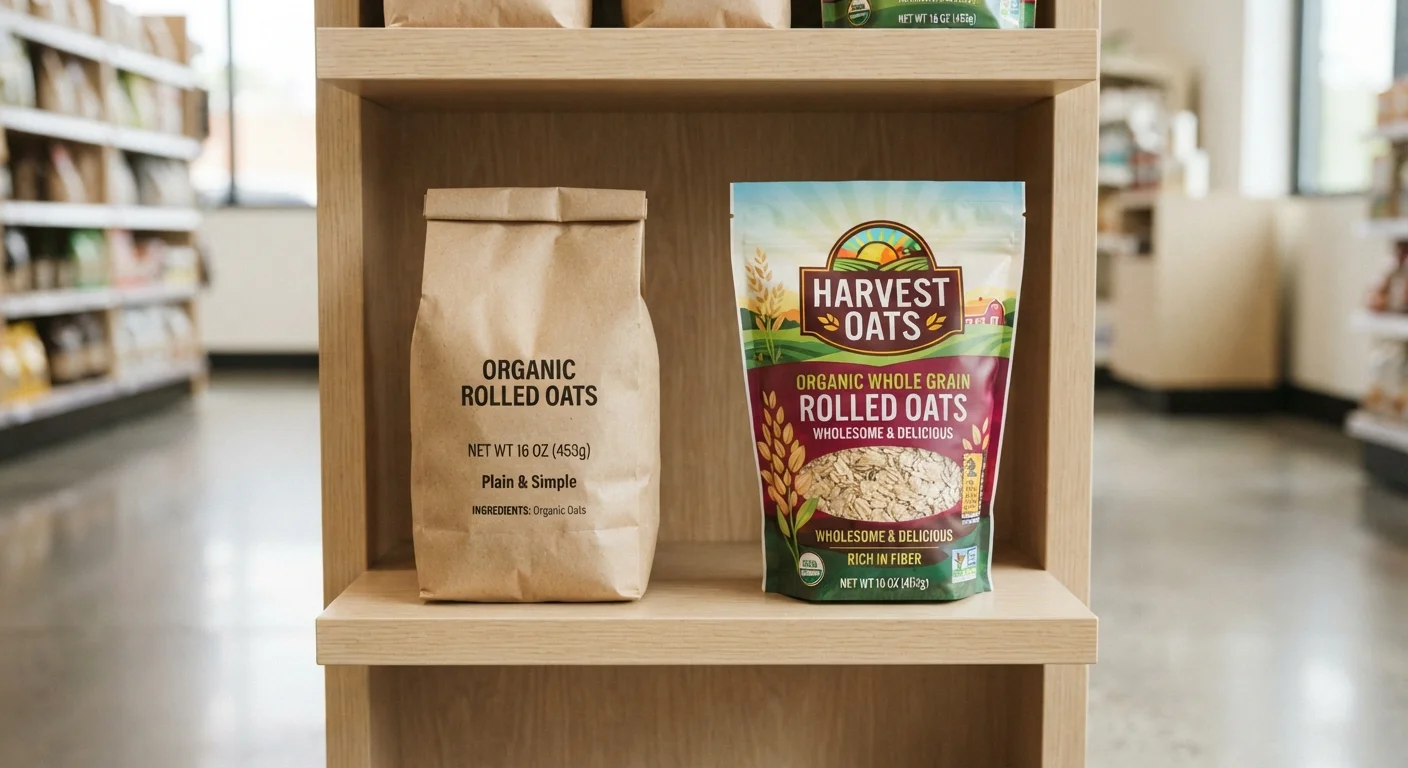
Photo: everythingtoday.com editorial
—— In This Article
Key Takeaways
- Store brands match name brands in many staple categories, including pantry basics and cleaning supplies.
- Meaningful quality differences do exist in certain food, medication, and personal care categories.
- Price gaps between store and name brands average 20 to 30 percent, according to Consumer Reports research.
- Regulatory standards mean store-brand medications follow the same active-ingredient rules as name-brand versions.
- Taste preferences and formulation differences are real in some food categories and worth testing before committing.
- Reading ingredient labels is more reliable than price or packaging when evaluating actual product quality.
Where store brands genuinely hold up
A large share of store-brand products come from the same manufacturing facilities that produce name-brand goods. Retailers often contract with established producers to package identical or near-identical formulations under a private label. This is documented most clearly in pantry staples: flour, sugar, salt, canned beans, dried pasta, and cooking oils. The commodity nature of these ingredients means there is little room for meaningful quality variation between brands.
Household and cleaning products follow the same logic. Active chemical concentrations in store-brand dish soap, all-purpose cleaner, and laundry detergent are frequently comparable to name-brand versions. Consumer-focused publications have repeatedly found that store-brand cleaners perform within a narrow margin of their name-brand equivalents on standard cleaning tasks.
Over-the-counter medications are worth singling out. The U.S. Food and Drug Administration requires that store-brand (generic) OTC drugs contain the same active ingredients at the same dosage as name-brand products. A store-brand ibuprofen tablet contains the same active compound at the same milligram level as the leading name-brand version. The price difference, often 40 to 60 percent, reflects marketing spend rather than pharmacological difference.
Retail pricing myths can make shoppers assume that a higher price signals higher quality. In these categories, it usually does not.
| Criterion | Store brands | Name brands |
|---|---|---|
| Average price difference | 20-30% less on average | Standard retail price |
| Pantry staples (flour, sugar, canned goods) | Comparable quality | No consistent advantage |
| OTC medications | Same active ingredients (FDA-mandated) | Same active ingredients |
| Cleaning and household supplies | Comparable performance | Marginal performance edge in some cases |
| Condiments and flavored foods | Formulation varies; taste may differ | Consistent flavor profile |
| Skincare and personal care | Ingredient concentration may be lower | Often higher active-ingredient concentration |
| Infant formula | Meets FDA nutritional standards | Meets FDA nutritional standards |
| Packaging and branding | Minimal, functional | Heavily marketed |
Where the gap is real
Food categories with complex flavor profiles are where store brands most often fall short in taste tests. Condiments, sauces, certain cheeses, and snack foods have formulations that vary noticeably between producers. A store-brand ketchup may use a different tomato concentrate ratio or a different vinegar balance, producing a result that tastes measurably different to a household accustomed to a specific product. These differences are not imaginary, and switching without a test run can lead to wasted food and frustrated family members.
Fresh and refrigerated products also show more variation. Store-brand deli meats, yogurt, and shredded cheese differ from retailer to retailer because the supplier network is less standardized. Quality can be perfectly acceptable, but it is less predictable across store locations and seasons.
Specialty personal care products, including certain skincare formulations, are another area where ingredient concentration and vehicle (the base that carries active ingredients) differ enough to affect results. A store-brand moisturizer with 0.5 percent of a key ingredient will not perform the same as a name-brand version with 2 percent. Reading the ingredient list and concentrations, where disclosed, matters more than the label or price point.
Parents choosing infant formula should consult a pediatrician before switching products based on price alone. While store-brand infant formulas must meet the same FDA nutritional standards as name-brand versions, a healthcare professional can account for an individual infant's needs. Bulk buying considerations apply here too: buying large quantities of a formula before testing tolerance is a common and avoidable mistake.
A practical approach to deciding
The most reliable method is a category-by-category trial rather than a blanket policy. Start with pantry staples, cleaning supplies, and OTC medications, where the case for store brands is strong. Hold off on switching condiments, snack staples, or personal care products your household uses regularly until you have done a side-by-side comparison at home.
Ingredient labels are your primary tool. Compare active ingredients in medications, and scan full ingredient lists in food and personal care products. Price alone is a weak signal. A store brand priced 25 percent lower is not automatically a worse product, and a name brand priced 50 percent higher is not automatically better.
Track what works. Families who keep a simple running list of approved store-brand swaps avoid the friction of re-evaluating the same products repeatedly. Over a year, consistent store-brand use in staple categories can reduce a typical grocery bill by several hundred dollars, based on reported price gap averages. That figure will vary by household size, shopping frequency, and the specific retailers available to you.

Shopping Editorial Team
Shopping Editorial Team is the collective byline for our editorial team and contributor network. Articles published under this byline or an editorial pen name are researched, written, and reviewed according to our editorial standards for clarity, consistency, and independence before publication.
View author profile